When to visit the Moroccan Sahara: the honest calendar
By the Desert Foum Zguid team · Updated 11 August 2026
Short answer: the best periods for Morocco's Sahara are October–November and February–April — 22–28 °C days, mild nights, superb light. December–January is beautiful but cold at night (0–8 °C at camp). From late June to late August we advise against dune nights. Here is the month-by-month detail, from an agency that lives in the desert year-round.
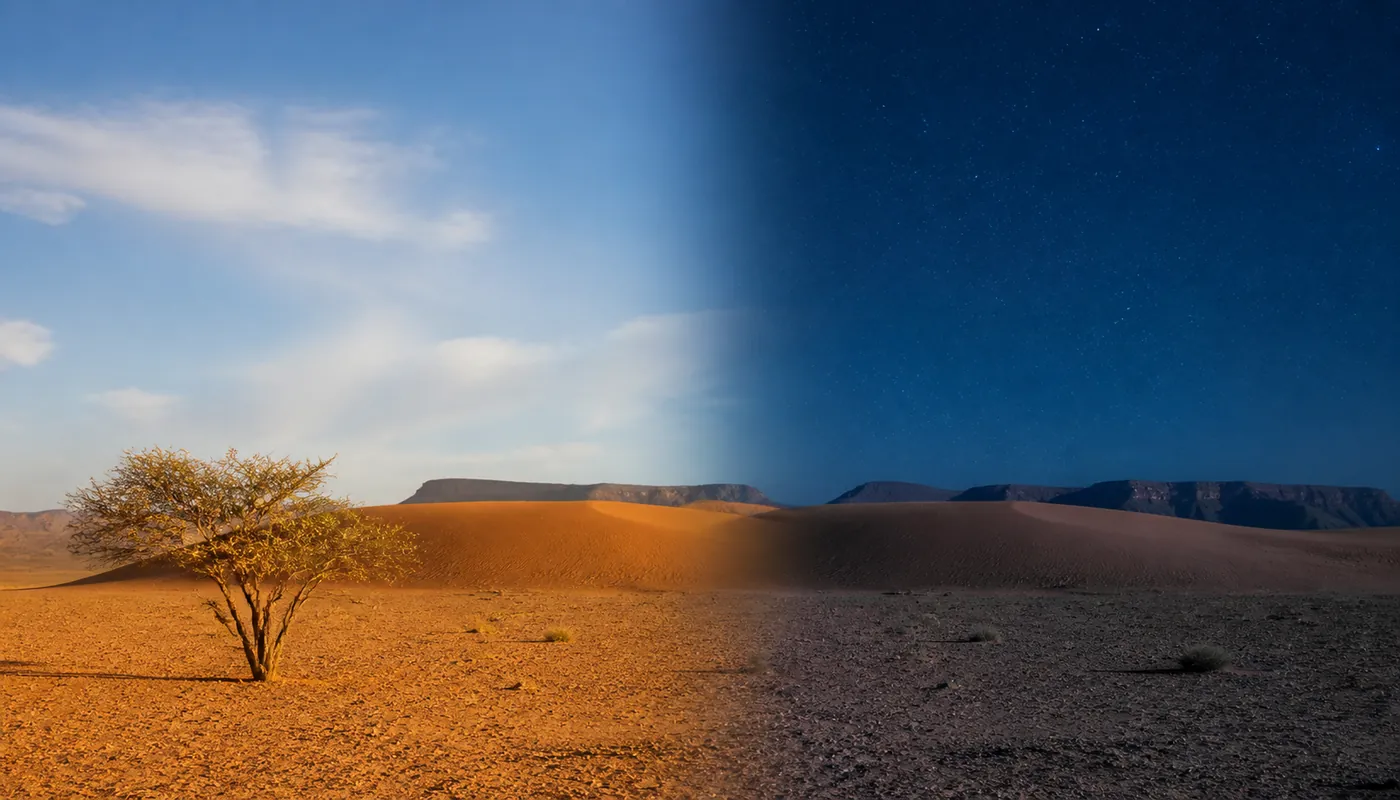
The month-by-month calendar
| Month | Day / Night | Our verdict |
|---|---|---|
| September | 32-38 °C / 20 °C | Season restart; hot but workable, hardly anyone around. |
| October | 27-32 °C / 15 °C | ★ Ideal — gentle heat, golden light, lake sometimes wet. |
| November | 22-27 °C / 10 °C | ★ Ideal — the best temperature/crowd compromise. |
| December | 18-22 °C / 3-8 °C | Superb and quiet; cold nights (sleeping bags provided), holidays book early. |
| January | 17-21 °C / 0-6 °C | The purest light of the year; for well-equipped travellers. |
| February | 20-25 °C / 6-10 °C | ★ Ideal — the desert warms up, birds on the lake in good years. |
| March | 24-29 °C / 10-14 °C | ★ Ideal — acacias in leaf; blowing sand possible (chergui). |
| April | 27-33 °C / 14-18 °C | ★ Very good — end of high season, growing daytime heat. |
| May | 32-38 °C / 18-22 °C | Workable with early starts; last dune nights early June. |
| June-August | 40-47 °C / 26-30 °C | Dune nights not advised; sunrise Lake Iriqui days only. |
Indicative temperatures for the Foum Zguid – Erg Chigaga area, from our seasons on the ground. The desert remains a climate of extremes: the day/night gap often exceeds 15 °C.
Choosing by what you have in mind
- First camp night — October–November or March–April: nothing to compromise on.
- Photography and stargazing — December–February: clearest air, blazing Milky Way, dunes without footprints. Pack a warm hat and fleece for the camp night.
- Families — autumn half-term, February and Easter all fall in the good windows; book a few weeks ahead.
- Wildlife and a wet lake — January–March in rainy years: flamingos and migrants on Lake Iriqui. Message us for the lake's real-time state.
- Summer in the south — walk the palm grove and Tissint, drive to the lake at dawn, sleep in the village: the July desert is lived early in the morning — our summer guide is devoted to it.
- Ramadan — February-March for several years to come, right in high season: everything runs, and the ftour at the camp is a rare moment — see the desert during Ramadan.
- The festive season — Christmas for the calm, New Year's Eve for the party; both book out early.
Booking at the right time
Outside holidays, our tours from Foum Zguid can be booked a few days ahead without trouble. Three exceptions: New Year's Eve (camps full weeks ahead), Easter, and the May bank holidays — for those dates, write to us as soon as your plans are set.
Frequently asked questions
Can you sleep in the desert in summer?
At Erg Chigaga we advise against it from late June to late August: even at night the heat stays punishing under canvas. We swap the dune night for an oasis night and run sunrise departures to Lake Iriqui instead.
Does it rain in the desert?
Rarely, but yes — mostly between September and November, as brief storms. It is a blessing in disguise: rains sometimes refill Lake Iriqui, bring the acacias into leaf and draw gazelles and birds back into the national park.
Are there sandstorms?
Blowing sand is possible year-round, most often March to May (the chergui wind). Our guides read the local weather and adjust route or timing; the camp is built to take it, and a well-tied scarf handles most of it.