Still weighing the two great ergs? Read Erg Chigaga vs Erg Chebbi: which to choose.
The last wild erg
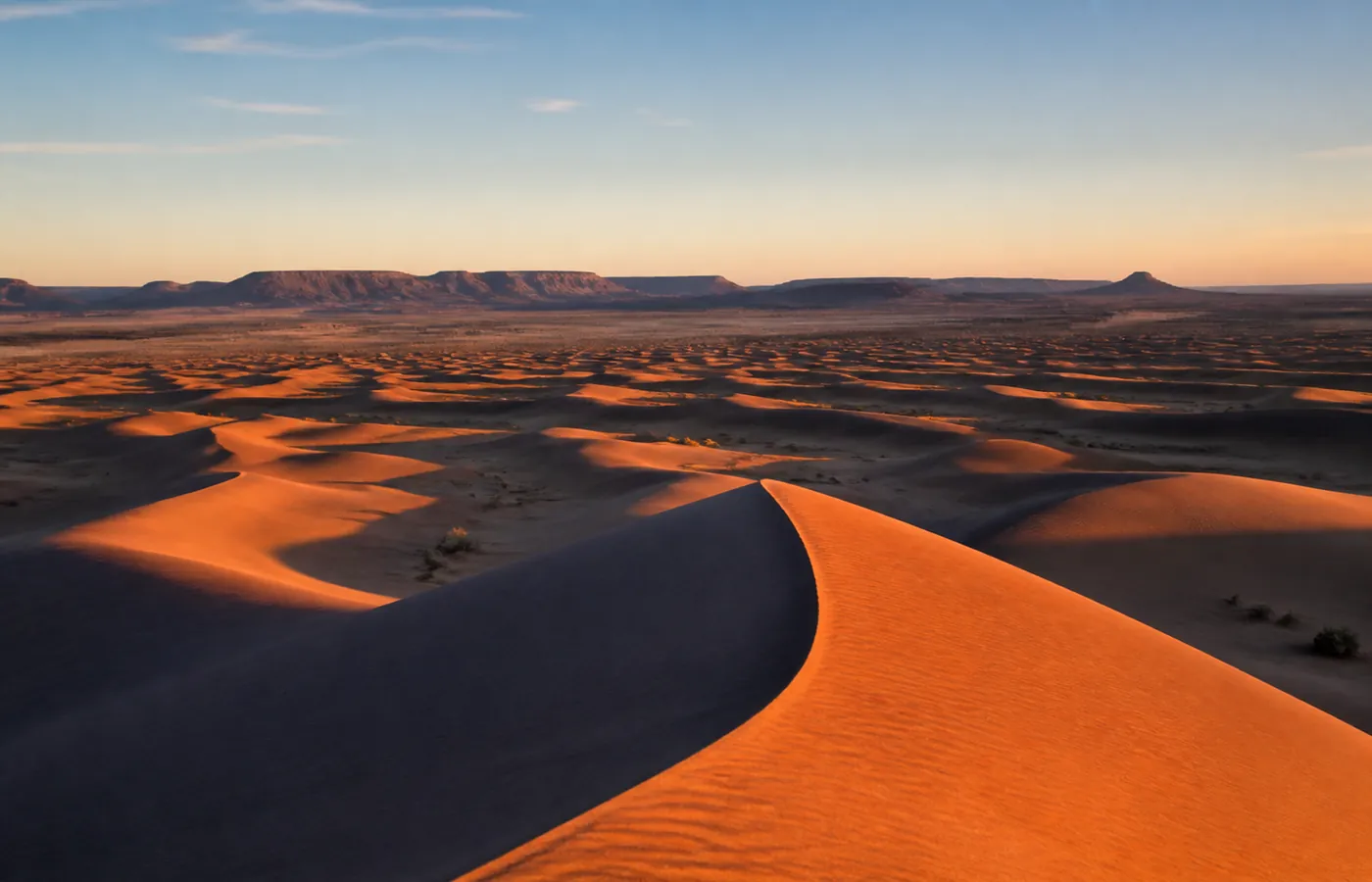
Erg Chigaga (also written Chigaga) stretches some forty kilometres between Lake Iriqui and the Draa river, in Morocco's far south. Unlike Erg Chebbi at Merzouga, no hotel lines its dunes and no paved road comes near: the only inhabitants are nomad camps and the seasonal bivouacs, taken down every summer.
That remoteness is its reputation. Here the silence is complete, the horizon empty in every direction, and after dark the erg becomes one of the country's best stargazing sites — no light pollution within 60 kilometres. The Milky Way is visible to the naked eye most of the year.
What to experience at Erg Chigaga
- The camp night — the core experience: dinner by the fire, music, and a sky like nowhere else. See our camp.
- Sunset and sunrise — from a ridge, as the sand turns gold, red, then blue.
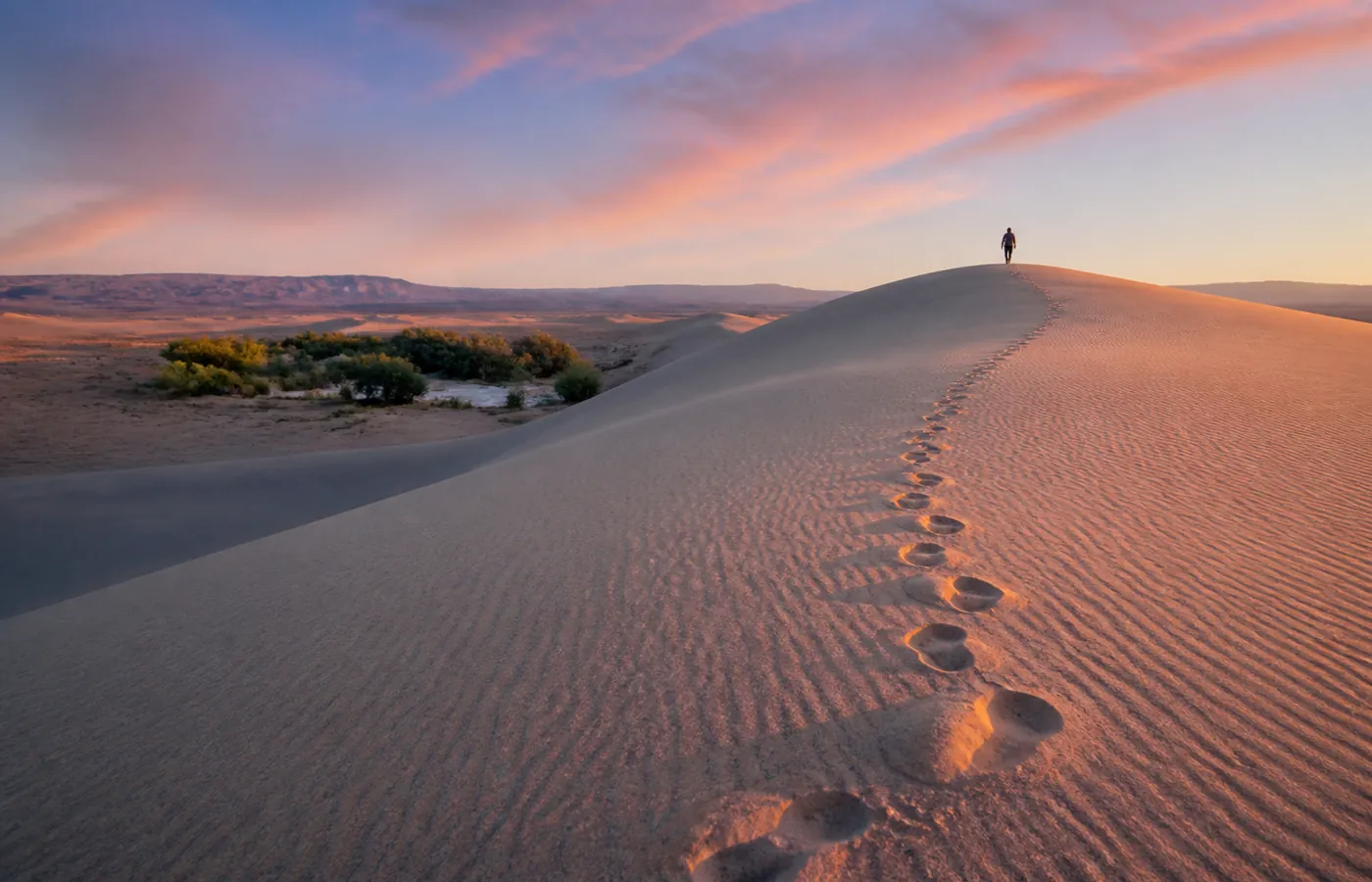
- Walking the dunes — barefoot at first light, when the sand is cool and unmarked.
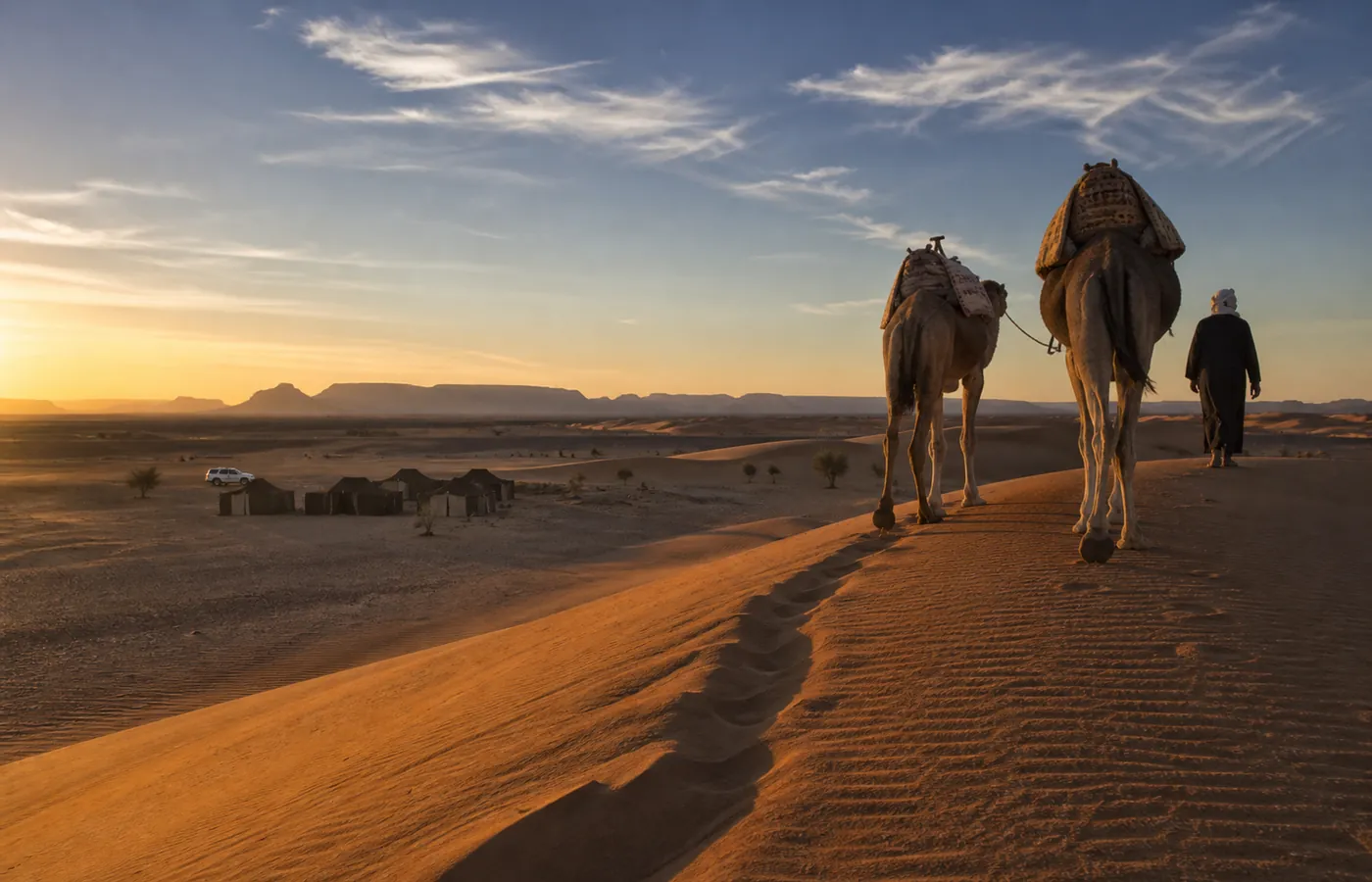
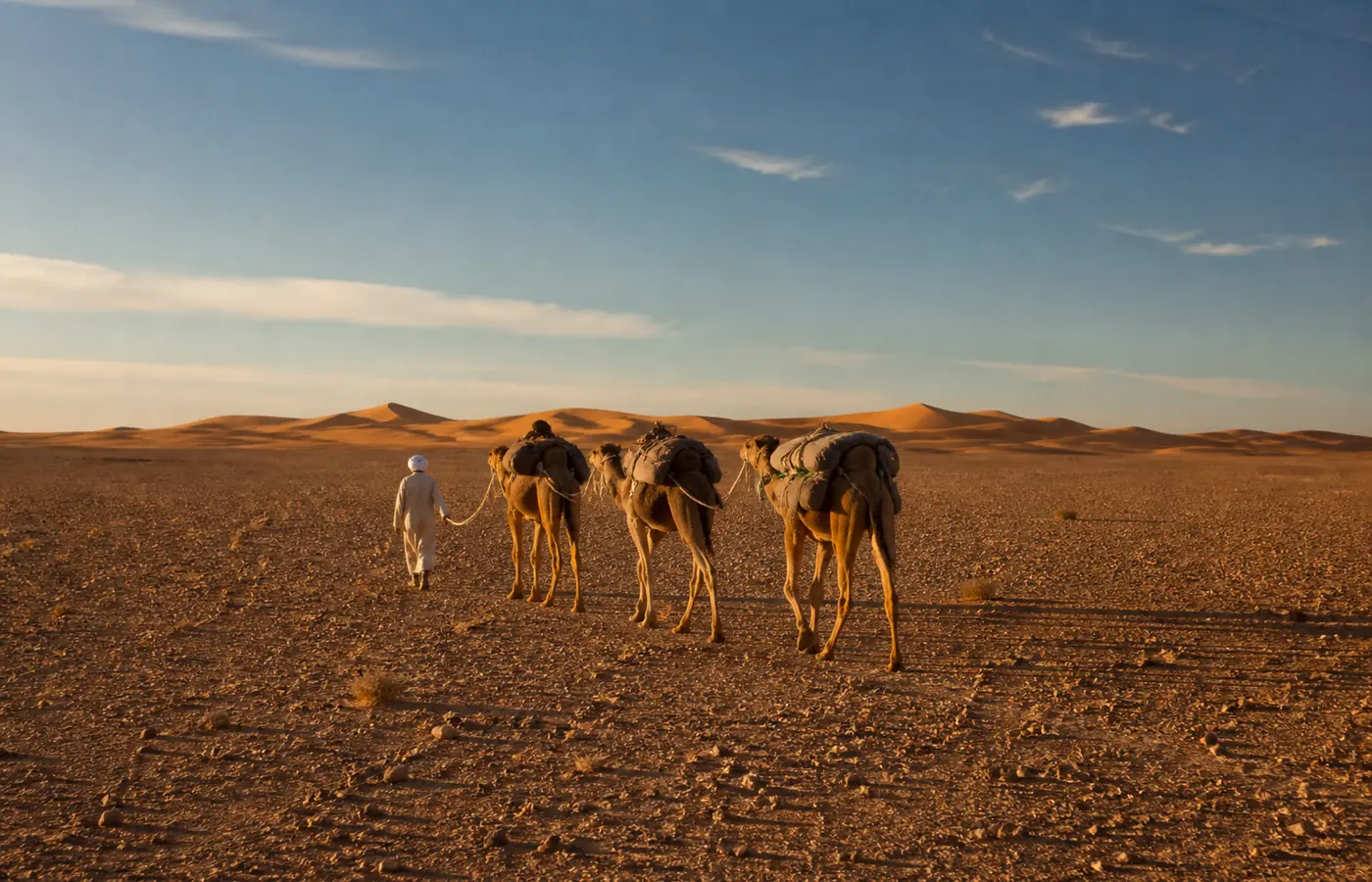
- Camel riding — an hour at caravan pace, or a multi-day camel trek for the adventurous.
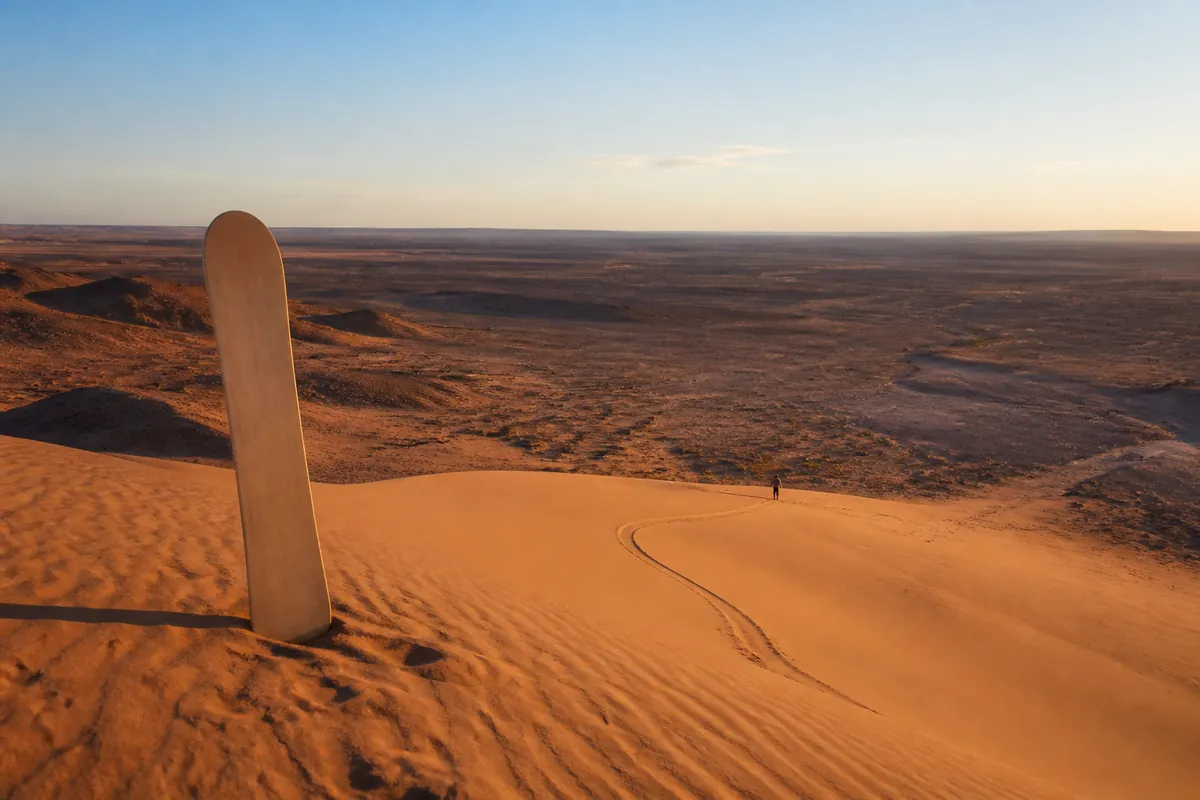
- Sandboarding — the western slopes ride beautifully; we keep boards at the camp.
- Meeting the nomads — families still live around the erg; tea shared under the tent is many guests' favourite memory.
How to get there
| Approach | Track | Notes |
|---|---|---|
| From Foum Zguid | ≈ 2.5 h | The shortest route, across Lake Iriqui and the Moroccan Colorado. Our speciality. |
| From M'hamid | ≈ 3.5 – 4 h | Longer track via the intermediate ergs — the two routes compared. |
| From Marrakech | 1–2 days | Via Ouarzazate and Foum Zguid — see our 3-day trip. |
By camel trek, allow 4–5 days from M'hamid or Foum Zguid — the classic caravan crossing, for travellers with time.
Life at the edge of the erg
Chigaga is not empty; it is inhabited differently. A few nomad families live around the erg all year, moving between waterholes and acacia pasture with their goats and camels. The tourist camps, ours included, go up in September and come down in June: through the summer, the desert takes back its full rights. This cohabitation has unwritten rules that our guides follow to the letter: never camp near the wells, never photograph anyone without asking, and when a nomad tent invites you in for tea, you accept, because that is the desert's hospitality speaking and it is not refused.
Where all this sand comes from
An erg is not a heap of sand left lying about: it is a construction of the wind, patient and still in progress. Sediments laid down over millennia by the Draa and the Bani's seasonal rivers were picked up, sorted and pushed by the prevailing winds into this natural trough between Lake Iriqui and the valley. The dunes advance, collapse and rebuild; after a chergui blow the crests change their drawing, and guides take their bearings from the mountains, not the sand. To walk on a dune is to walk on landscape in motion.
That is also why the erg stays untouched: nothing durable can be built on ground that travels. Camps are raised at the edges, on stable ground, and taken down every summer. The sand carries on with its work.
Photographing Chigaga, and reading its stars
Two tips from our guides for photographers. First, the hours: the first and last hour of daylight draw the shadows that give dunes their relief; at noon everything flattens. Second, the wind: after a windy day the crests are sharp and unmarked, and that is when the best images happen. For the sky, aim for the new moon: without it, the Milky Way rises over the dunes in a darkness few places in Morocco can still offer. In winter Orion stands over the camp; late in the season the galactic core returns. A tripod, a head torch on red mode, and the night does the rest.
Chigaga and Lake Iriqui: the winning pair
The Foum Zguid track has an advantage no other approach offers: it strings the south's two great landscapes into one crossing — the immense white plain of Lake Iriqui, then the sea of dunes. That is why our 2-day tours leave from this side: the desert tells its whole story, from vanished water to sand.
Frequently asked questions
Chigaga or Chegaga — which spelling is right?
Both are used — Erg Chigaga and Erg Chegaga transcribe the same Amazigh name. You may also see "Chgaga" on some maps. We use Chigaga, the spelling English-speaking travellers search most; French sources tend to write Chegaga.
Erg Chigaga or Erg Chebbi (Merzouga) — which should I choose?
Chebbi has taller dunes and hotels at their foot; Chigaga is larger, more remote and building-free — reachable only by 4x4 or camel. For silence, dark skies and an end-of-the-world feeling, Chigaga wins; for easy access in a rental car, Chebbi.
Can you visit Erg Chigaga as a day trip?
Yes, from Foum Zguid — feasible in one long day (about 5 h of track round trip plus time in the dunes). But the magic of Chigaga is the night: if you can, sleep at the camp.
When is the best time to go?
October to April for the best comfort. December–January: cold nights but exceptional light. July–August: too hot for dune nights — choose a sunrise Lake Iriqui trip instead.