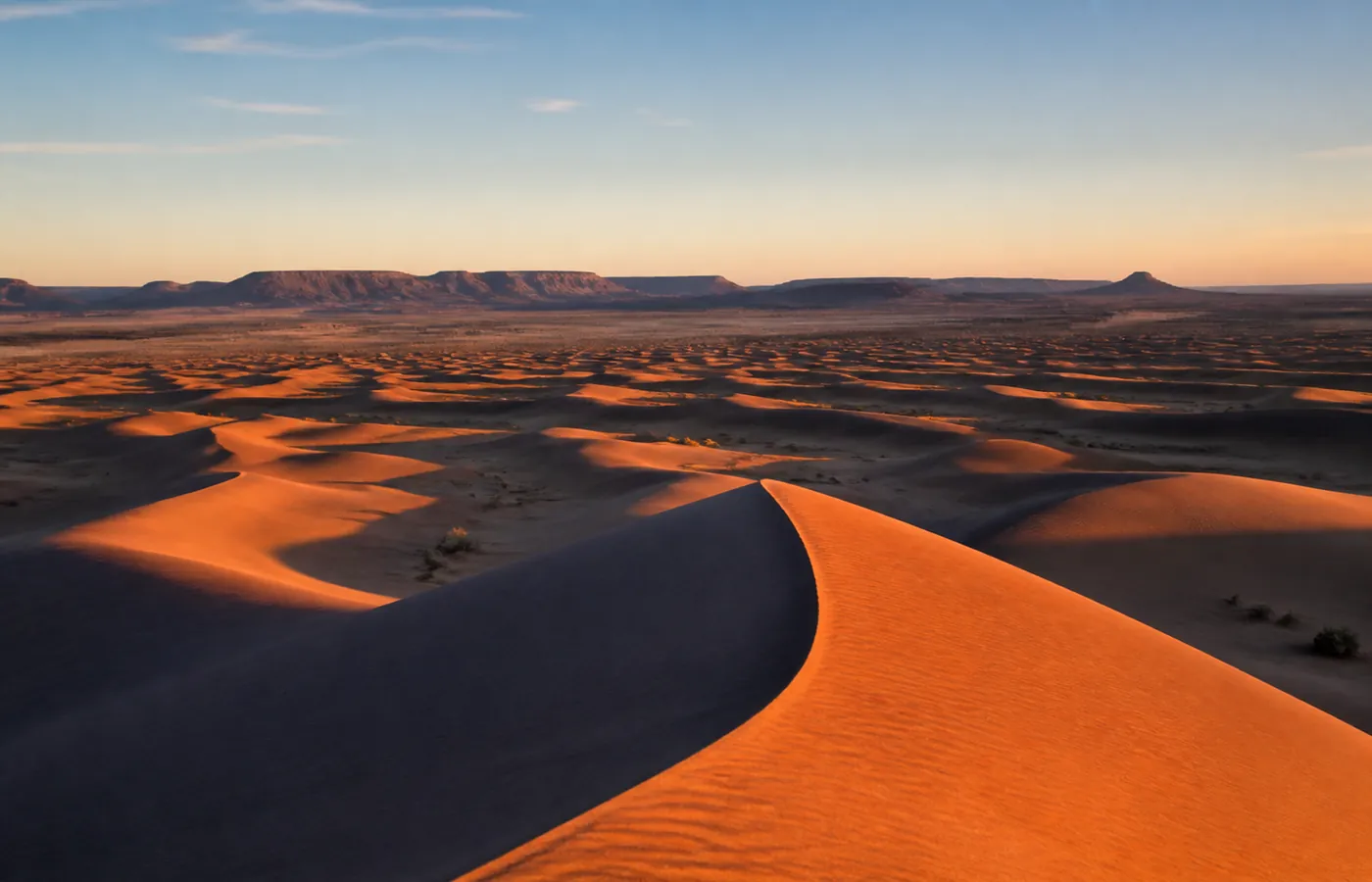
With one more day than our classic trip, the desert changes scale. There is time for everything: the rock carvings of Jbel Bani, the sacred oasis of Oum Laalag, two camp nights including one deep among the dunes, and a real morning walk in the erg when the light is at its best.
This is the tour we recommend to travellers who want to feel the silence of the Sahara rather than cross it. The pace stays gentle — never more than three hours of driving at a stretch — and every stop was chosen by our guides as a favourite place, not a waypoint.
Highlights
- Two nights at a desert camp by the dunes
- Jbel Bani rock carvings and the Oum Laalag oasis
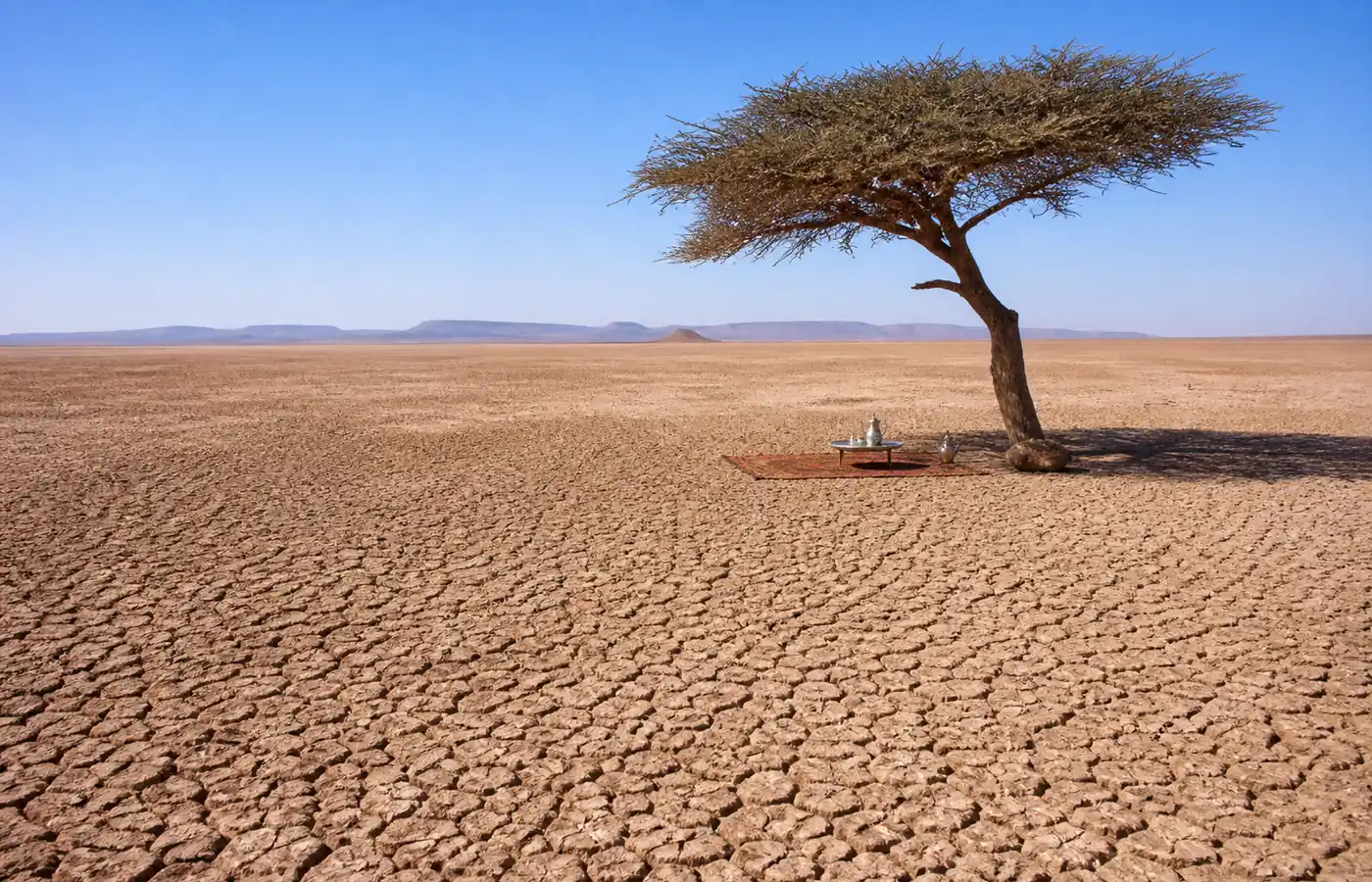
- Full crossing of Lake Iriqui
- Sunrise walk in the high dunes
- Berber dinners, campfire, music
Itinerary
- Day 1
Foum Zguid → Lake Iriqui → Erg Chegaga
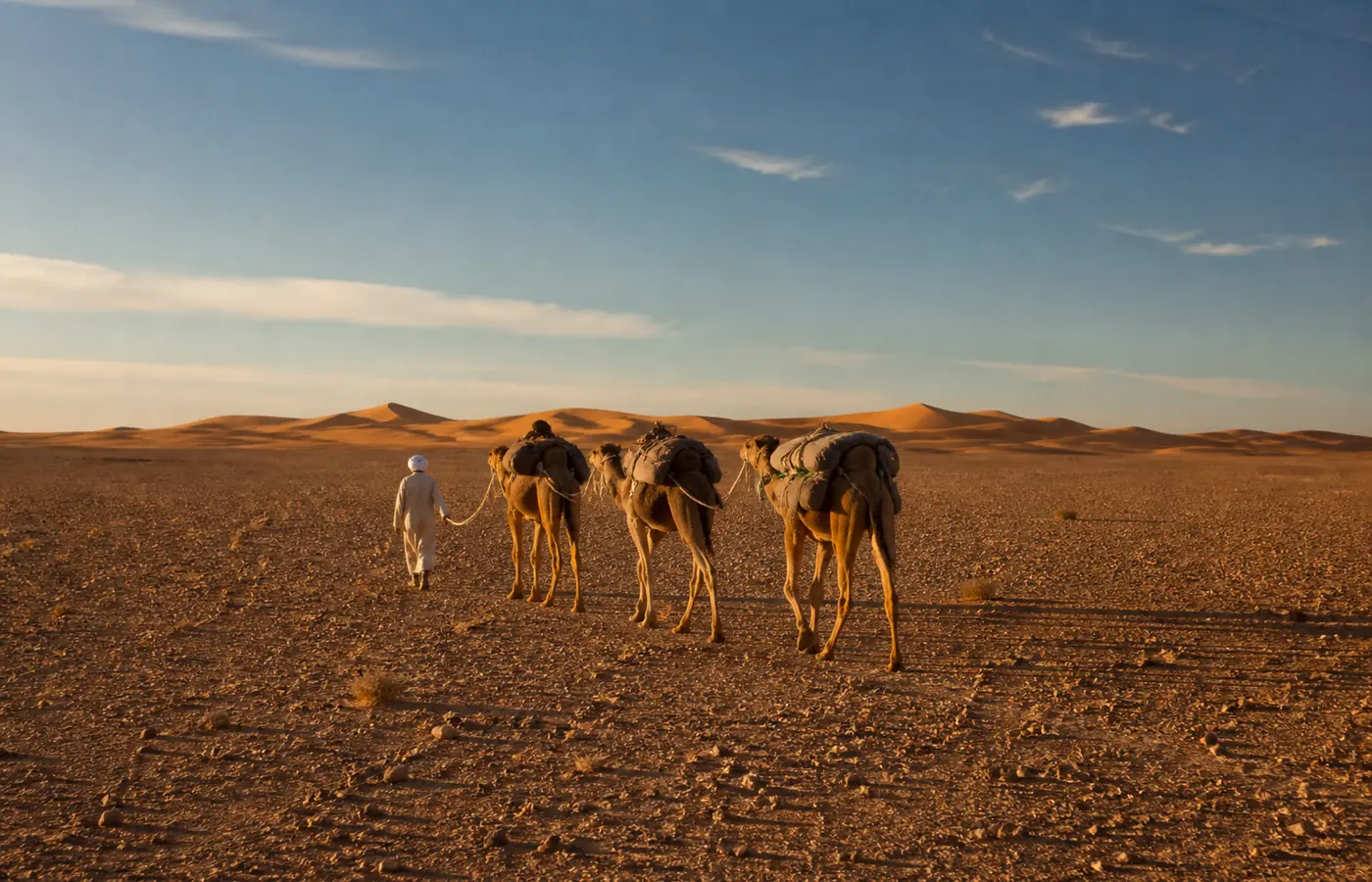
Early-afternoon departure, crossing of Lake Iriqui and the Moroccan Colorado, arrival at the dunes for sunset. Camels, dinner, first camp night.
- Day 2
Walk in the erg, Oum Laalag oasis
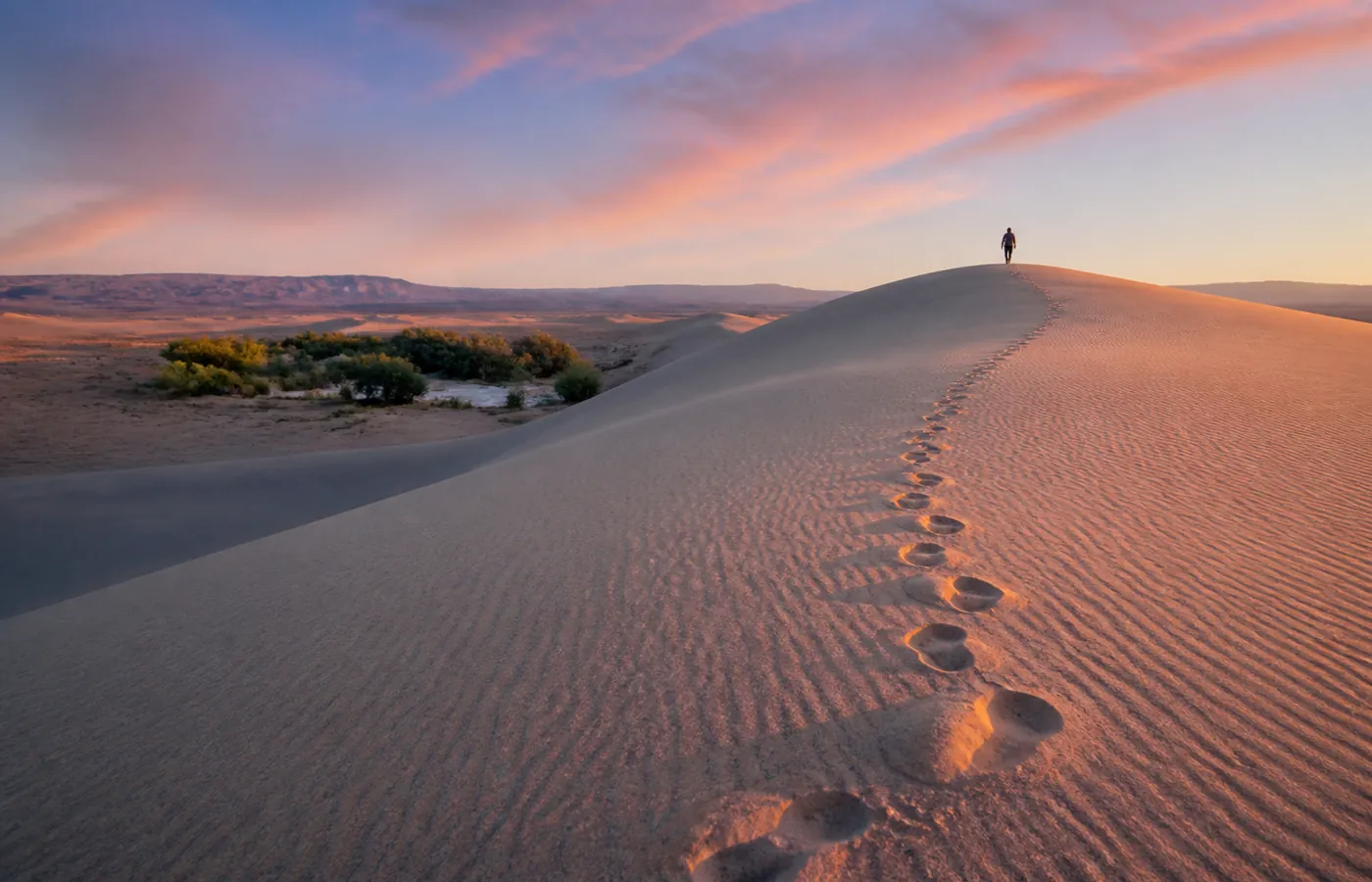
Sunrise walk in the high dunes while the sand is cool. Drive to the sacred Oum Laalag oasis for lunch and a siesta under the tamarisk trees. Back to camp along the ridges, second night under the stars.
- Day 3
Rock carvings and return
Track along Jbel Bani with a stop at the prehistoric rock carvings — antelopes and hunters engraved thousands of years ago. Return to Foum Zguid for lunch.
What's included
✓ Included
- Private 4x4 with driver-guide
- 2 nights at an equipped desert camp
- Full board from day-1 dinner to day-3 breakfast
- Camel ride
- Tea and mineral water
✕ Not included
- Day-1 lunch
- Other drinks
- Tips
Why three days change everything
In two days you see the desert. In three, you start to inhabit it. The difference is not in the kilometres: it is in waking up among the dunes knowing you will sleep there again. On day two there is no road left to cover and no schedule to keep. You walk when the light is good, sleep in the shade when it is hot, and let the tea take the time it takes. It is our guides' favourite day, and the one travellers talk about most afterwards.
The erg walk, no fitness required
The second-morning walk lasts between an hour and a half and two hours, on cool sand, usually barefoot. It is not a hike: it is a wander between the crests, with stops for photos, beetle tracks and the guide's explanations. A six-year-old does it without noticing; so does a seventy-five-year-old, at their own pace. If you prefer, a camel carries you and the result is the same: being deep in the erg, far from camp, as the sun comes up.
Oum Laalag, the stop the other tours miss
Day-two lunch happens at the Oum Laalag oasis, a freshwater spring ringed by tamarisk trees in open desert. Nomads hold it sacred, caravans have rested here for as long as anyone remembers, and hurried tours drive past without seeing it. You eat in the shade, nap after lunch, and understand what a spring means when everything around it is mineral. Our travellers often say this is where the third day pays for itself.
Season and climate
Runs September to early June. For the dune walk, October–April is best. Cold nights in December–January: warm sleeping bags provided — bring a hat.
Frequently asked questions
How is this different from the 2-day tour?
The third day adds the sunrise walk in the erg, the Oum Laalag oasis and the Jbel Bani rock carvings — and above all a slower rhythm, with two full desert nights instead of one.
Do I need to be fit for the dune walk?
No. The day-2 walk lasts about 1.5–2 hours at an easy pace, barefoot or in light shoes. It can be shortened or swapped for a camel ride.
Can the camp be private?
Yes, especially outside school holidays. Tell us when booking: depending on dates we set up a private camp for your group at no extra charge from 4 people.
Do we sleep at the same camp both nights?
Yes, by design: keeping the same camp avoids re-pitching tents and frees the whole second day for the oasis and the walk. On request we swap the second night for a simpler nomad-style camp deeper in the erg, for travellers who want to push further.
What should I pack for three days?
One small soft bag (the rest can stay in storage with us): scarf, sunglasses, sunscreen, a fleece for evenings, head torch, power bank and light closed shoes. Sleeping bags, blankets, water and meals are provided. In winter add a warm hat: nights drop below 8 °C.
More questions? See our full FAQ and our traveller reviews.